

The Forgotten Port of Liinakhamari: Artillery Rings, Fjords of Pechenga Bay, and Military Secrets of the Arctic
Exploring one of the most enigmatic corners of the Kola North: giant concrete gun rings, the fjords of Pechenga Bay, and the heritage of the Great Patriotic War at the very edge of the Kola Peninsula.
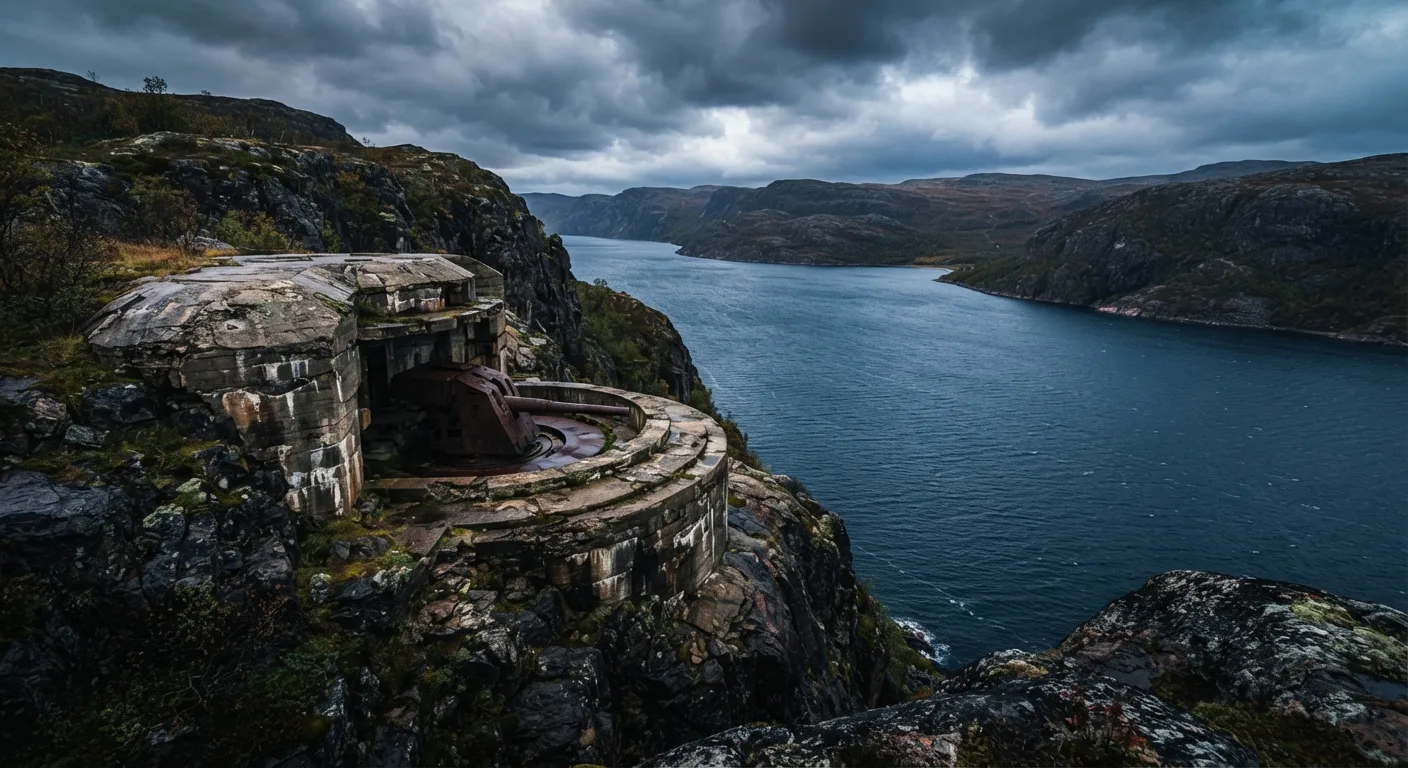
An Arctic Port with a Dramatic History
The settlement of Liinakhamari, sheltered deep within the narrow fjord of Pechenga Bay, is a place with a unique and harsh history. Between 1920 and 1944, this territory was part of Finland under the name of Petsamo and served as the country's only ice-free ocean port. The combination of an advantageous geographical position, access to the Barents Sea, and proximity to strategic nickel deposits made Liinakhamari a key military base during World War II.
Between 1941 and 1944, German command turned the coast of Pechenga Bay into an impregnable fortified area known as the "Arctic Wall". Today, Liinakhamari attracts military history researchers, lovers of wild northern nature, and travelers seeking off-the-beaten-path routes across the Murmansk region.
Military Secrets: Concrete Rings and Batteries of the Third Reich
The main mystery and the most impressive site in Liinakhamari are the giant concrete ring foundations for heavy artillery guns. Situated on the hills and rocky heights surrounding the settlement, they still amaze visitors with the sheer scale of engineering ingenuity.
Artillery Positions and the Devkina Zavod Battery
The Wehrmacht cut deep foundation pits into the bedrock, filled them with meters of heavy-duty concrete, and installed swivel mounts for large-caliber guns. The exact purpose of some of these structures still sparks debate among local historians:
- Artillery rings: perfectly circular concrete structures several meters in diameter with massive metal studs. They were intended for mounting naval and coastal guns to block the entrance to the Pechenga Fjord.
- Underground bunkers and galleries: a network of tunnels cut into granite, ammunition depots, command posts, and observation posts, some descending dozens of meters into the rock.
- Devkina Zavod Battery: a fortified coastal defense complex that controlled the passage of vessels through Pechenga Bay. Concrete gun emplacements and underground posterns are preserved here.
The liberation of Liinakhamari in October 1944 during the Petsamo-Kirkenes Operation was one of the most brilliant and daring amphibious assault operations conducted by Soviet naval infantry and scouts under the command of Viktor Leonov. A surprise assault on the granite fortified region from both sea and land broke enemy resistance and preserved the port's infrastructure.
Nature of Pechenga Bay: Fjords and the Rugged Barents Sea
In addition to its history, Liinakhamari enchants visitors with its monumental northern nature. Pechenga Bay is a true Arctic fjord, flanked on both sides by sheer rocky cliffs covered with mosses, lichens, and dwarf birches.
The waters of the bay remain ice-free all year round thanks to the influence of the warm North Atlantic Current. The high vantage points offer breathtaking views of the winding sea corridor opening out to the open Barents Sea. In summer and early autumn, bird colonies can be observed on the rocky shores, and ringed seals and bearded seals can occasionally be spotted in the coastal waters.
Practical Information: Border Zone, Logistics, and Safety
A trip to Liinakhamari requires careful advance preparation due to the region's special legal status and harsh climatic conditions.
How to Get There and Access Regulations
The settlement of Liinakhamari is located approximately 150 kilometers northwest of Murmansk, close to the border with Norway. Traveling by car along the R-21 "Kola" federal highway toward Zapolyarny and Pechenga takes about 2.5 to 3 hours.
ATTENTION: Border permit regulations. Liinakhamari is located in a restricted border security zone. Russian citizens must obtain an official border zone permit in advance via the Gosuslugi portal or through the Border Directorate of the FSB of Russia for the Murmansk Region. Processing takes 15 to 30 days. When entering through the checkpoint, a valid Russian internal passport and permit must be presented.
Seasonality and Gear
- Best time to visit: from late June to late September. During this period, the hills are free of snow, allowing for safe exploration of the concrete rings and rock fortifications. The Polar Day (from late May to late July) provides round-the-clock daylight for long walks.
- Winter period: from November to April, the hills are blanketed with thick snow, and entrances to bunkers and concrete rings can be completely buried under drifts. The Northern Lights can be seen here on clear nights from late August to mid-April.
- Clothing: make sure to follow the three-layer rule (moisture-wicking thermal underwear, fleece mid-layer, and a wind- and waterproof shell). The weather on the Barents Sea coast changes rapidly.
- Footwear: trekking boots with firm ankle support and deep tread. Rocks and wet moss can be extremely slippery.
- Equipment: to explore the underground structures and bunkers, be sure to bring a powerful headlamp, spare batteries, and gloves.
Safety Rules
Many military structures are in a deteriorated condition. Exercise extreme caution when exploring bunkers and artillery rings: open shafts, rockfalls, and protruding rebar can be encountered in the dark. Avoid approaching the edge of sheer coastal cliffs during strong winds.
Base for Your Explorations in the Murmansk Region
An eventful expedition to the far reaches of the Pechenga District requires proper rest and recovery. After a long drive and walks along the windy coast, a comfortable hotel in Murmansk is the ideal place to return to.
Staying at the 69 Parallel Hotel (14 Lyzhny Proezd), you will be able to catch your breath in comfort, take advantage of free car parking, enjoy a hearty breakfast at the on-site café, and plan your next trips around the Kola Peninsula. The 24-hour front desk and cozy rooms ensure a great stay at any time of day or night.